Historic addresses

Buildings.
Streets.
Institutions.

The archive.

Addresses, buildings and institutions in London where Black British history happened. Each entry gives the location and links to the record that documents it — a heritage listing, an archive holding or a published history.

Addresses you
can stand at.

Each one linked
to its record.

29 stops. Many stories.

Filter by area

29 shown

Brixton, SE241973–1989

165 Railton Road

C. L. R. James lived and died in the flat above the Race Today offices. English Heritage put a blue plaque here in 2004 reading ‘lived and died here’. Darcus Howe moved Race Today to this address in 1973 and ran it from here for twelve years.
Brixton, SW22014–

1 Windrush Square

The Black Cultural Archives — Britain’s national Black archive, and the only one of its kind. Closed to the public since 1 February 2025, reading room by appointment. New leadership and a £250,000 Heritage Fund grant, but no reopening date announced.

Brixton, SW9Since 1888

Electric Avenue

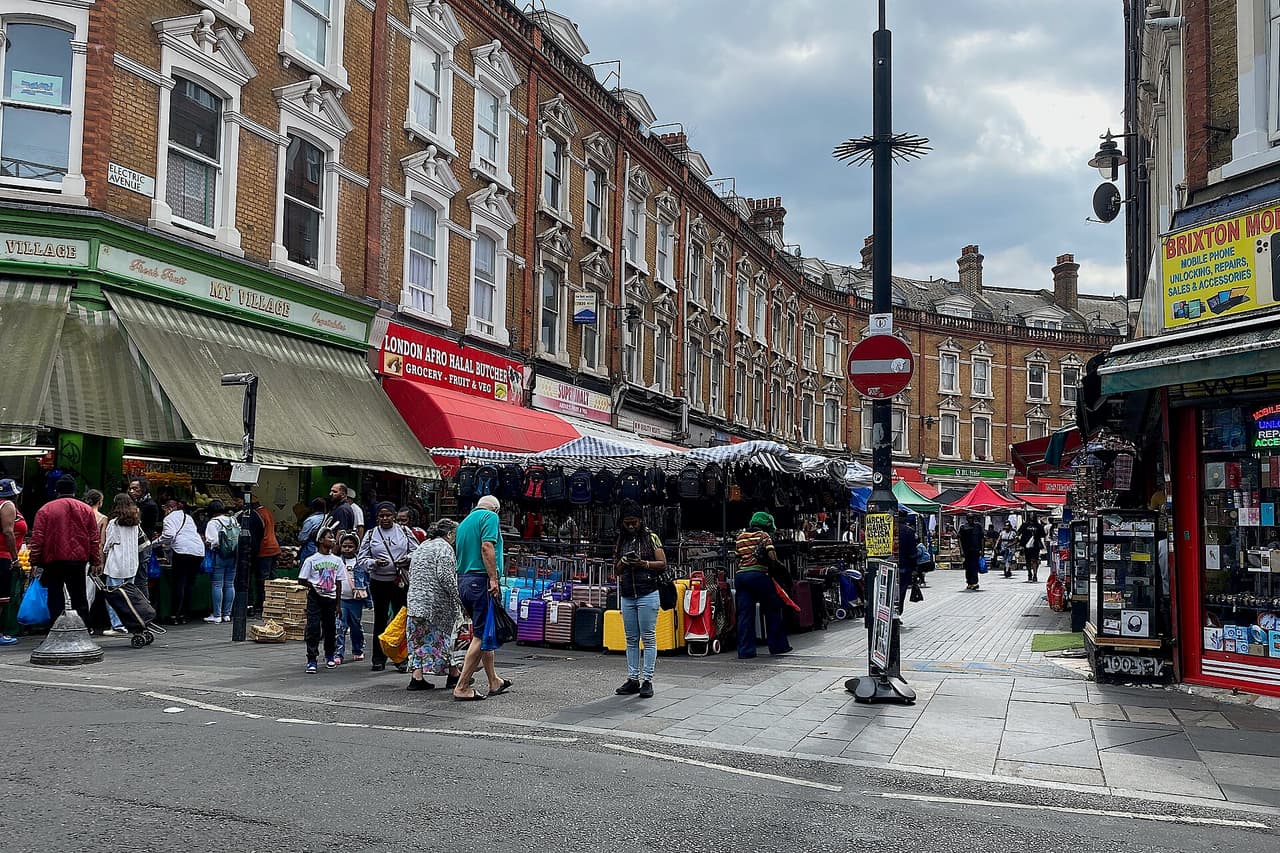
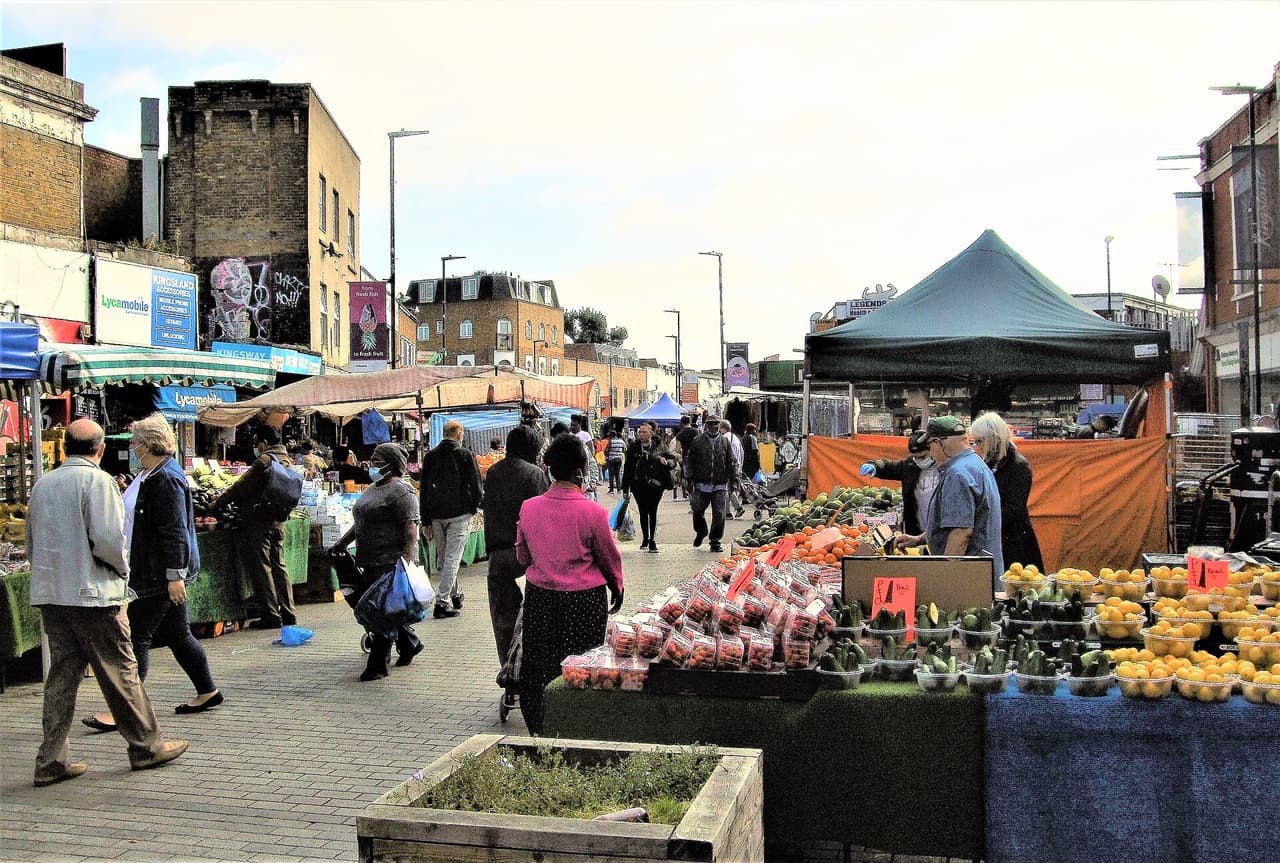
Brixton’s market spine, and the street Eddy Grant put on the radio in 1982. Still the trading heart of the area: fruit and veg, fish, fabric, and the shops that stayed when the rents moved.

Dalston, E8Since 1880s

Ridley Road Market

East London’s African and Caribbean food trade in one street — and a site of organised anti-fascist resistance long before it was a market people wrote about.

An abstract plate for Notting Hill, not a photograph of the building

09

All Saints Road, Notting Hill, W111968–1992

The Mangrove

Frank Crichlow’s Caribbean restaurant at number 8 became the centre of Black Notting Hill and a target of repeated police raids. A march against those raids in August 1970 led to the trial of the Mangrove Nine, and in December 1971 all nine were acquitted of incitement to riot. The case produced the first judicial acknowledgement of racial hatred inside the Metropolitan Police.

An abstract plate for North Kensington, not a photograph of the building

10

Golborne Road and Southam Street, W101959

Where Kelso Cochrane was killed

Kelso Cochrane, a 32-year-old Antiguan carpenter, was stabbed here by a group of white youths shortly after midnight on 17 May 1959, months after the Notting Hill riots. He died in hospital about an hour later and nobody was ever charged. More than 1,200 people walked in his funeral procession on 6 June 1959.

An abstract plate for Earls Court, not a photograph of the building

11

101 Lexham Gardens, W8 6JN1949–1954

Learie Constantine’s house

The West Indies cricketer and campaigner lived here between 1949 and 1954 and wrote Colour Bar in the house. In 1943 he had won damages from the Imperial Hotel in Russell Square after it refused his family a room they had already booked. In 1969 he became the first person of African descent to sit in the House of Lords.

An abstract plate for Paddington, not a photograph of the building

12

Harrow Road, Paddington, W9c.1907–1924

Dr John Alcindor’s surgery

Alcindor, born in Trinidad, ran a practice on Harrow Road from about 1907 and was Paddington’s senior district medical officer from 1921 until his death, treating poor patients free in their homes. Turned down by the Royal Army Medical Corps in 1914 because of his "colonial origin", he volunteered with the British Red Cross instead and met wounded soldiers at London railway stations throughout the First World War.

An abstract plate for Westminster, not a photograph of the building

13

Caxton Street, SW1H1900

Caxton Hall

The first Pan-African Conference in history was held in this building, then Westminster Town Hall, over three days in July 1900. It was organised chiefly by the Trinidadian barrister Henry Sylvester Williams, and W. E. B. Du Bois drafted the address "To the Nations of the World" here. The building is Grade II listed and no plaque records the conference.

An abstract plate for Westminster, not a photograph of the building

14

King Charles Street, SW1Ac.1770s

Where Ignatius Sancho kept his shop

Sancho, born on a slave ship around 1729 and brought to England as a child, opened a grocer’s shop on what was then Charles Street in the 1770s. As a male householder paying rates, he became the first Black Briton known to have voted in a parliamentary election. The shop building is gone; a plaque on the Foreign Office marks the site.

An abstract plate for Camden, not a photograph of the building

15

Judd Street, WC1H 9JE1959

Camden Town Hall

On 30 January 1959 Claudia Jones, editor of the West Indian Gazette, organised an indoor Caribbean carnival in this hall, partly televised by the BBC. It was staged as an answer to the Notting Hill riots of the previous year and is recognised as the ancestor of the Notting Hill Carnival. The building was St Pancras Town Hall until 1965 and now holds a Claudia Jones Room.

An abstract plate for Hampstead, not a photograph of the building

16

Hampstead Lane, NW3 7JR1761–1804

Kenwood House

Dido Elizabeth Belle, daughter of an enslaved African woman and a Royal Navy officer, was raised here by her great-uncle the Earl of Mansfield, who was her legal guardian. Mansfield was Lord Chief Justice when he delivered the 1772 Somerset judgment, ruling that an enslaved person could not be forcibly removed from England. Belle lived at Kenwood into adulthood.

An abstract plate for Islington, not a photograph of the building

17

Gifford Street, N11971–1991

The Keskidee Centre

The Guyanese-born architect Oscar Abrams bought a derelict mission hall for £9,000 and opened it in 1971 as Britain’s first arts centre for the Black community, with a library, gallery, theatre and restaurant. Linton Kwesi Johnson developed dub poetry there, Angela Davis spoke there in 1974, and Bob Marley filmed the video for Is This Love there in 1978. It closed in 1991 and was badly damaged by fire in 2012.

An abstract plate for Finsbury Park, not a photograph of the building

18

76 Stroud Green Road, N4 3EN1967–present

New Beacon Books

John La Rose and Sarah White founded Britain’s first Black publisher in 1966 and opened the country’s first Black bookshop in this terrace the following year. The building became the base of the Caribbean Artists Movement, the Black Parents Movement and the New Cross Massacre Action Committee. The George Padmore Institute, an archive of post-war Black Britain, was founded on the upper floors in 1991.

An abstract plate for Tottenham, not a photograph of the building

19

West Green Road, Tottenham, N151965–1990s

Dyke & Dryden

Len Dyke and Dudley Dryden founded the firm in May 1965 as a records and cosmetics shop importing reggae from Jamaica, and Tony Wade joined in 1968. From 1973 it concentrated on African and Caribbean hair and skin products, a market mainstream manufacturers ignored, and grew into Britain’s first Black-owned multi-million-pound business. It was funded from the founders’ own money because the banks refused them loans.

An abstract plate for Tottenham, not a photograph of the building

20

77 Northumberland Park, N17 0TH1909–1911

Walter Tull’s lodgings

Walter Tull lodged here while playing for Tottenham Hotspur, a short walk from the ground. Orphaned by the age of nine, he made his debut at White Hart Lane on 1 September 1909 as one of the first Black professional footballers in Britain, and faced racist abuse from the terraces. He enlisted in 1914, became the first Black combat officer to lead British troops, and was killed at the Somme in 1918.

An abstract plate for Dalston, not a photograph of the building

21

12 Dalston Lane, E81966–1997

The Four Aces Club

Newton Dunbar and the producer Charlie Collins opened the Four Aces in 1966 in a disused Victorian circus building. For some thirty-three years it was one of Britain’s most important Black music venues, programming ska, rocksteady, reggae, jazz and soul, and from 1990 it ran as Club Labrynth, pioneering indoor rave and jungle. It closed in 1997 and was demolished in 2007.

An abstract plate for Peckham, not a photograph of the building

22

164 Queens Road, Peckham, SE15 2HP1922–1947

Dr Harold Moody’s house

Harold Moody, a Jamaican doctor refused hospital posts and lodgings in London because he was Black, set up his own practice here in 1922 and worked in the house until his death in 1947. From this address he founded the League of Coloured Peoples in 1931, Britain’s leading inter-war civil rights organisation, and published its journal The Keys.

An abstract plate for New Cross, not a photograph of the building

23

New Cross, SE141981

439 New Cross Road

Fire broke out at about 5.40am on 18 January 1981 during a joint birthday party at this house. Thirteen young Black people died, and a survivor died two years later. The inquest and the police handling of the case convinced many that arson by racists had been ignored. On 2 March 1981 around 20,000 people marched from Fordham Park to Hyde Park in the Black People’s Day of Action.

An abstract plate for Greenwich, not a photograph of the building

24

Greenwich, SE10 8QX1767

111 Maze Hill

In September 1767 Olaudah Equiano stayed at this house with the Guerin sisters, relatives of his former owner who had arranged his schooling and baptism. He had bought his own freedom and returned to London from the West Indies. He went on to write The Interesting Narrative of the Life of Olaudah Equiano in 1789, the most influential slave narrative of the British abolition movement.

An abstract plate for Eltham, not a photograph of the building

25

Well Hall Road, Eltham, SE91993

The Stephen Lawrence memorial

Stephen Lawrence, an eighteen-year-old aspiring architect, was murdered in a racist attack at this bus stop on the night of 22 April 1993. The Metropolitan Police investigation failed, and the 1999 Macpherson report found the force institutionally racist, reshaping British policing and race relations law. A stone set into the pavement marks the spot; it has been vandalised and replaced more than once.

An abstract plate for West Ealing, not a photograph of the building

26

141 Coldershaw Road, West Ealing, W13 9DU1969–1990

Bogle-L’Ouverture

Jessica and Eric Huntley founded Bogle-L’Ouverture Publications from this house at the end of the 1960s, publishing Walter Rodney, Linton Kwesi Johnson and Andrew Salkey. They opened a bookshop nearby on Chignell Place, one of Britain’s first Black bookshops, and renamed it the Walter Rodney Bookshop after Rodney was assassinated in 1980. It faced repeated racist attacks.

An abstract plate for Stonebridge, not a photograph of the building

27

Harrow Road, Stonebridge, NW10 0RG1988–2025

Bridge Park

Conceived by the Harlesden People’s Community Council after the 1981 Brixton uprising, Bridge Park was built in a converted 1905 bus depot as a Black-led community enterprise centre with 32 business units, a sports hall and a music studio. At its peak it served 3,000 people a week. It closed on 31 July 2025 and Brent Council plans demolition; the Twentieth Century Society is backing a listing application.

An abstract plate for Stratford, not a photograph of the building

28

Gerry Raffles Square, E15 1BN1991–1995

Theatre Royal Stratford East

The BiBi Crew, seven Black women theatre-makers, formed in 1991 to produce new writing from an African Caribbean perspective and devised and directed their own productions at this theatre until 1995. They were answering the absence of Black writers, performers and audiences in British theatre. A Newham Heritage Plaque to the group was unveiled here on Windrush Day 2023.

An abstract plate for South Norwood, not a photograph of the building

29

30 Dagnall Park, South Norwood, SE25 5PH1900–1901

Samuel Coleridge-Taylor’s house

The composer, son of a Sierra Leonean father and an English mother, moved here early in 1900 after his marriage and lived in the house until 1901. He was by then internationally known for Hiawatha’s Wedding Feast, toured the United States three times at the invitation of Black American musicians, and attended the First Pan-African Conference in London in 1900. He was the first Black person in Britain to receive a blue plaque.

29 sites recorded, each linked to the record that proves it. Several share a photograph of Brixton because no freely-licensed image of the specific building exists — those cards say “Pictured:” and name what is actually shown. We would rather label the substitute than imply a photograph we do not have.