science
Mary Seacole
Nurse, hotelier and author
Crimean War
Turned down in London, she made her own way to the Crimea in 1855, ran the British Hotel near Balaclava and nursed soldiers. Her 1857 memoir was a London bestseller.
Westminster
Health and science
Nurse, academic and sickle cell specialist
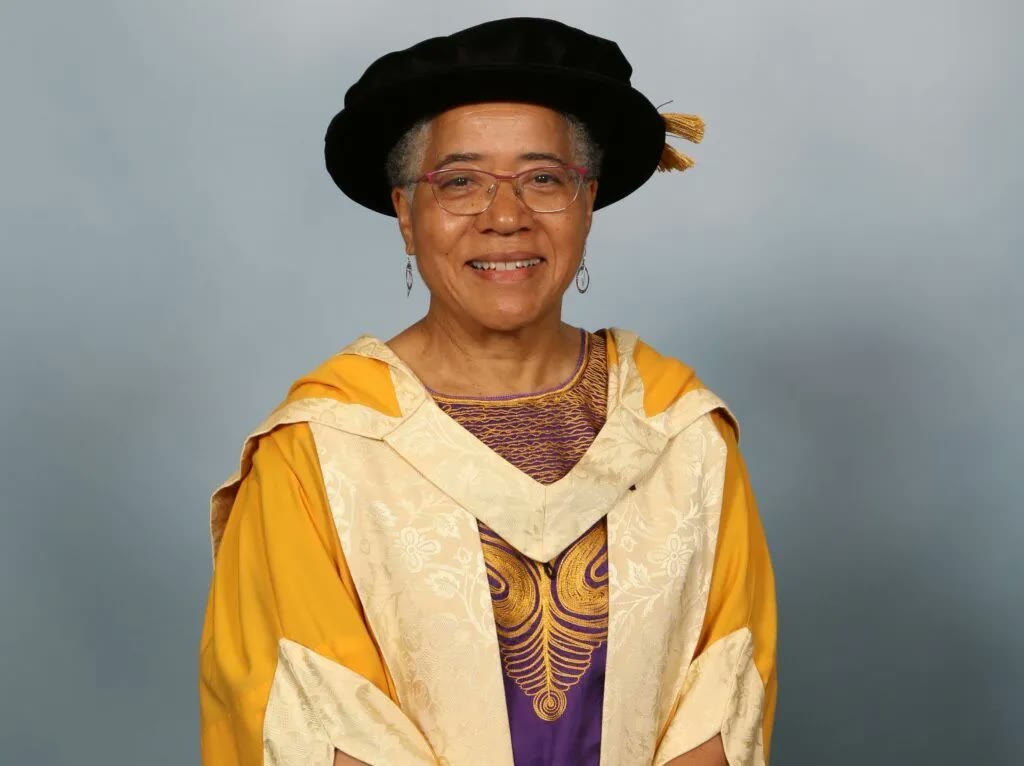
Elizabeth Anionwu is a nurse who in 1979 helped set up the UK’s first nurse-led sickle cell and thalassaemia screening and counselling centre, in Brent. She went on to teach genetic counselling at UCL, found a nursing centre named after Mary Seacole and help lead the appeal for Seacole’s statue.
Elizabeth Anionwu was born in Birmingham on 2 July 1947 (Wikipedia). Her mother was a classics student at Newnham College, Cambridge, and the first in her family to go to university; her father was a Nigerian law student at Cambridge who later became a barrister and diplomat (her own site, Wikipedia). She spent much of her childhood in Catholic children’s homes run by nuns, and a nun who dressed her eczema made her want to become a nurse (About Elizabeth, RCN Bulletin).
At 16 she left school with seven O-levels and started work for the NHS as a school nurse assistant in Wolverhampton (About Elizabeth). She wrote to four London teaching hospitals and heard nothing back, which she later called “the first barrier” (RCN Bulletin). She met her father shortly before her 25th birthday and took his surname (Wikipedia).
She trained in London: a 1965 photograph shows her as a student nurse at Paddington General Hospital (Melan magazine), and by 1968 she was a staff nurse (RCN Bulletin). She qualified as a nurse, then as a health visitor and a tutor (Wikipedia), and worked as a health visitor in Brent. When she questioned how data was collected from Black and Brown families she was failed on her practical assessment, and the decision was overturned after she reported it (Melan magazine).
In Brent in the early 1970s she met three families whose children had sickle cell anaemia, and had nothing to offer them. “I had not been taught anything about the condition,” she said (Pride of Britain). She felt “helpless and ashamed”, and set out to teach herself (RCN Bulletin).
“I had not been taught anything about the condition.”
Elizabeth Anionwu, on meeting families with sickle cell as a Brent health visitor, Pride of Britain, 2019
The turning point came through Dr Misha Brozovic, a haematologist at Central Middlesex Hospital who had noticed how many of her patients had sickle cell and organised lectures on it. Anionwu went to one, Brozovic asked her to join the work, and her first job was to count how many patients the service had (London North West University Healthcare NHS Trust). In 1979 the two set up the UK’s first sickle cell and thalassaemia screening and counselling centre, and Anionwu became the country’s first sickle cell and thalassaemia nurse specialist (RCN Bulletin, Pride of Britain). More than 30 UK centres later used the Brent centre as a model (Wikipedia).
The same year she helped set up the Sickle Cell Society (Pride of Britain). In 1981 a Churchill Fellowship took her to Jamaica and the United States to study the prevention of deaths and illness from sickle cell disease around birth (Churchill Fellowship). Forty years after it opened, the centre’s team, led by Dr Lola Oni, was caring for more than 600 people (LNWH).
She was awarded a PhD by the Institute of Education, University College London, in 1988. From 1990 to 1997 she lectured at UCL’s Institute of Child Health, becoming senior lecturer in community genetic counselling (About Elizabeth), and taught an NHS course with Professor Marcus Pembrey (Wikipedia). In 1997 she became Dean of the School of Adult Nursing and Professor of Nursing at the University of West London, and in 1999 she set up its Mary Seacole Centre for Nursing Practice, which she led until she retired in 2007 (About Elizabeth).
With Professor Karl Atkin she wrote The Politics of Sickle Cell and Thalassaemia (Open University Press, 2001). For the NHS Sickle Cell and Thalassaemia Screening Programme she chaired a nursing framework that the Royal College of Nursing accredited in 2010, and a 2012 report on specialist nurses funded by Roald Dahl’s Marvellous Children’s Charity (About Elizabeth, Wikipedia).
Anionwu was vice-chair of the Mary Seacole Memorial Statue Appeal from its launch in November 2003 (About Elizabeth). The appeal ran for 12 years and raised more than £500,000 (Guy’s and St Thomas’), much of it in small donations from schools, nurses and army units (Mary Seacole Trust). Martin Jennings’s bronze of Mary Seacole was unveiled in the gardens of St Thomas’ Hospital in Lambeth on 30 June 2016 (Guy’s and St Thomas’), and the trust calls it the UK’s first memorial to a named Black woman (Mary Seacole Trust). Her damehood in the 2017 New Year Honours was for services to nursing and to the appeal (About Elizabeth), and she is a Life Patron of the Mary Seacole Trust (Homerton College).
She was appointed CBE in 2001 and became a Fellow of the Royal College of Nursing in 2004. In July 2018 she was named among the 70 most influential nurses and midwives in NHS history (About Elizabeth), and in 2019 she received the Pride of Britain Lifetime Achievement Award (Pride of Britain). During the Covid-19 pandemic she spoke out about the number of Black and minority ethnic nursing staff who died or became seriously ill (RCN Bulletin). She was a guest on Desert Island Discs in June 2020 (Homerton College) and published her memoir, Dreams From My Mother, in September 2021 (her own site).
In November 2022 she was one of six people appointed to the Order of Merit (Royal Household), among the last members chosen by Queen Elizabeth II (Royal Household). On 6 May 2023 she carried the Orb into Westminster Abbey at the coronation of King Charles III (Royal Household). She said later that she had taken the phone call inviting her for a scam (Community Practitioner).
co-founded the UK’s first sickle cell and thalassaemia screening and counselling centre, in Brent, with Dr Misha Brozovic (source)
Churchill Fellowship to Jamaica and the USA to study sickle cell disease around birth (source)
PhD from the Institute of Education, University College London (source)
set up the Mary Seacole Centre for Nursing Practice at the University of West London (source)
appointed CBE for services to nursing (source)
Mary Seacole statue unveiled at St Thomas’ Hospital after the appeal she vice-chaired (source)
made a Dame for services to nursing and the Mary Seacole Statue Appeal (source)
Pride of Britain Lifetime Achievement Award (source)
appointed to the Order of Merit (source)
carried the Orb at the coronation of King Charles III (source)
Listed editorially. Elizabeth Anionwu is not affiliated with BLACK LDN and has not endorsed it. Request a correction.
science
Nurse, hotelier and author
Crimean War
Turned down in London, she made her own way to the Crimea in 1855, ran the British Hotel near Balaclava and nursed soldiers. Her 1857 memoir was a London bestseller.
science
Science communicator and author
East London · TikTok
A school lab technician from east London who began filming experiments in lockdown, explains them in Patois and London slang, and won TikTok’s Education Creator of the Year in 2024.