Health and history

Mary Seacole

Nurse, hotelier and author

Crimean WarWestminsterLambethSources cited

Mary Seacole was a Jamaican nurse and businesswoman who, turned down by the War Office in London, made her own way to the Crimean War and ran the British Hotel near Balaclava. Her 1857 memoir, published in London, was an immediate bestseller.

Kingston and the Caribbean

Mary Seacole was born Mary Jane Grant in Kingston, Jamaica, in 1805, the daughter of a Scottish soldier and a Creole hotel-keeper (English Heritage). “I am a Creole, and have good Scotch blood coursing in my veins,” she wrote (Wonderful Adventures). Her mother, known as “the Doctress”, ran Blundell Hall, a boarding house that also served as a convalescent home, and Mary first visited London around 1821 (Wikipedia).

In 1836 she married Edwin Horatio Seacole, who died eight years later (English Heritage). Through the late 1840s and early 1850s she nursed cholera patients in Jamaica and Panama, and helped organise care in a British military camp during a yellow fever epidemic in Jamaica (English Heritage), at Up-Park Camp in Kingston in 1853 (Wikipedia). In Panama she also ran an eating house she called the British Hotel (Wikipedia).
Turned away in London

When war broke out in the Crimea she came to London, arriving in late 1854 (English Heritage). The War Office, the Quarter-Master General’s Department and Florence Nightingale’s nursing organisation all turned her down, and in her memoir she put this down to the colour of her skin (London Museum). She went into partnership with Thomas Day, a relative of her late husband (English Heritage), and had cards printed announcing a plan to “establish a mess table and comfortable quarters for sick and convalescent officers” (Wonderful Adventures). She sailed on 27 January 1855 (Wikipedia) and reached Balaclava in February (English Heritage).

“Did these ladies shrink from accepting my aid because my blood flowed beneath a somewhat duskier skin than theirs?”

Mary Seacole, Wonderful Adventures of Mrs Seacole in Many Lands, 1857

The British Hotel

She built the hotel on a rise near Kadikoi that she named Spring Hill, and it was finished by July 1855 at a cost of £800 (Wikipedia). “Everything, although rough and unpolished, was comfortable and warm,” she wrote of it (Wonderful Adventures). Soldiers knew it as “Mother Seacole’s Hut” (London Museum). She also worked at the sick wharf in Balaclava, where she wrote of one wounded man: “I ran up to him at once, and eased the stiff dressings” (Wonderful Adventures).

After Sevastopol fell in September 1855 she was reportedly the first woman to enter the city (English Heritage). W. H. Russell, the Times correspondent in the Crimea, later wrote the preface to her book (title page).

Bankruptcy, and a bestseller

Peace in 1856 left her with stock she could not sell, and in November 1856 she was declared bankrupt (English Heritage) at the Bankruptcy Court in Basinghall Street, in the City of London (Wikipedia). The Times and Punch ran appeals for her, backed by Crimean veterans (London Museum), and in July 1857 a Seacole Fund Grand Military Festival was held at the Royal Surrey Gardens in Kennington (English Heritage) over four days (Wikipedia).

That same month, while she was living at 14 Soho Square in Westminster (English Heritage), James Blackwood of Paternoster Row published Wonderful Adventures of Mrs Seacole in Many Lands (Project Gutenberg). The London Museum, which holds a copy, calls it the first autobiography published by an Afro-Caribbean woman in Britain and an immediate bestseller, and notes that she received royal patronage from Queen Victoria (London Museum).

Later years in London

She became a Catholic in 1860 and spent time back in Jamaica (Wikipedia), but was in London again by 1869, working as a masseuse to the Princess of Wales (English Heritage). That year the young Islington-born painter Albert Charles Challen painted her wearing three miniature medals: the British Crimea medal, the Turkish Medjidie and the French Legion of Honour (Helen Rappaport). In 1871 Count Gleichen made a bust of her (English Heritage).

She died at her home in Paddington on 14 May 1881 (English Heritage, Wikipedia), leaving an estate worth more than £2,500 (Wikipedia), and was buried at St Mary’s Roman Catholic Cemetery in Kensal Green (London Museum).

What remains

Her grave was rediscovered in 1973, and Jamaica awarded her its Order of Merit in 1990 (Wikipedia). In February 2004 she topped the 100 Great Black Britons poll (Jamaica Observer). English Heritage put a blue plaque on 14 Soho Square in 2007 (English Heritage). The historian Helen Rappaport bought the Challen portrait in 2004 after it surfaced at a sale in Burford, unveiled it at the National Portrait Gallery in 2005 and sold it to the gallery in 2009 (Helen Rappaport).

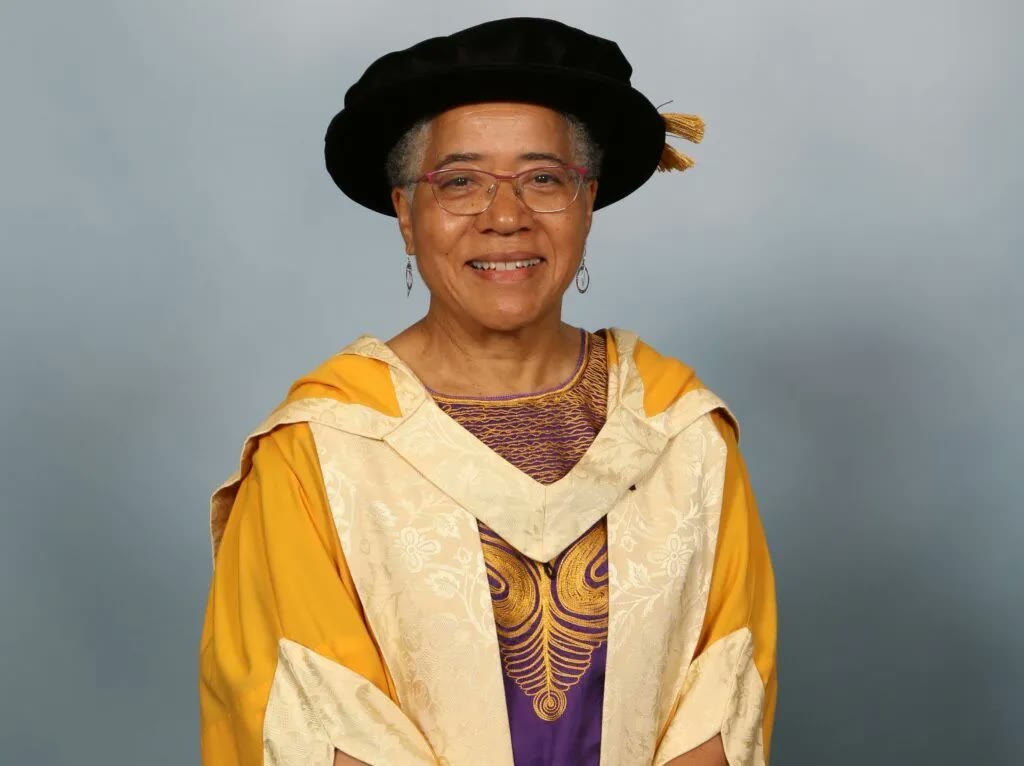
On 30 June 2016 Martin Jennings’s bronze statue of her was unveiled in the gardens of St Thomas’ Hospital in Lambeth, after a 12-year appeal that raised more than £500,000 (Guy’s and St Thomas’). The nurse Elizabeth Anionwu was its vice-chair, and in 1999 she had founded the Mary Seacole Centre for Nursing Practice at the University of West London (Elizabeth Anionwu). The Mary Seacole Trust, set up after the unveiling, calls the statue the UK’s first memorial to a named Black woman (Mary Seacole Trust).

Highlights

1855

reached Balaclava in February and opened the British Hotel near Kadikoi (source)

1855

reportedly the first woman to enter Sevastopol after its fall in September (source)

1857

Seacole Fund Grand Military Festival at the Royal Surrey Gardens, Kennington, in July (source)

1857

published Wonderful Adventures of Mrs Seacole in Many Lands in London (source)

1869

portrait painted by Albert Charles Challen, now in the National Portrait Gallery (source)

1871

bust made by Count Gleichen (source)

2004

voted greatest Black Briton (source)

2007

English Heritage blue plaque at 14 Soho Square (source)

2016

statue by Martin Jennings unveiled at St Thomas’ Hospital on 30 June (source)

Listed editorially. Mary Seacole is not affiliated with BLACK LDN and has not endorsed it. Request a correction.

Also in science

Elizabeth Anionwu

science

Elizabeth Anionwu

Nurse, academic and sickle cell specialist
Emeritus Professor, University of West London

Became the UK’s first sickle cell and thalassaemia nurse specialist in 1979, co-founding a Brent centre that more than 30 others later copied. Order of Merit, 2022.

Brent

law

Doreen Lawrence

Campaigner, charity founder and peer
Stephen Lawrence Charitable Trust

Her campaign after her son Stephen’s murder forced the 1999 Macpherson report on police racism. She built a trust and a centre for young people and sits in the Lords.

Greenwich

creative

Little Simz

Rapper, songwriter and actor
Age 101 / Forever Living Originals

Islington rapper who won the 2022 Mercury Prize and a BRIT for best new artist on her own Age 101 label, then curated the Southbank Centre’s Meltdown in 2025.

Islington